
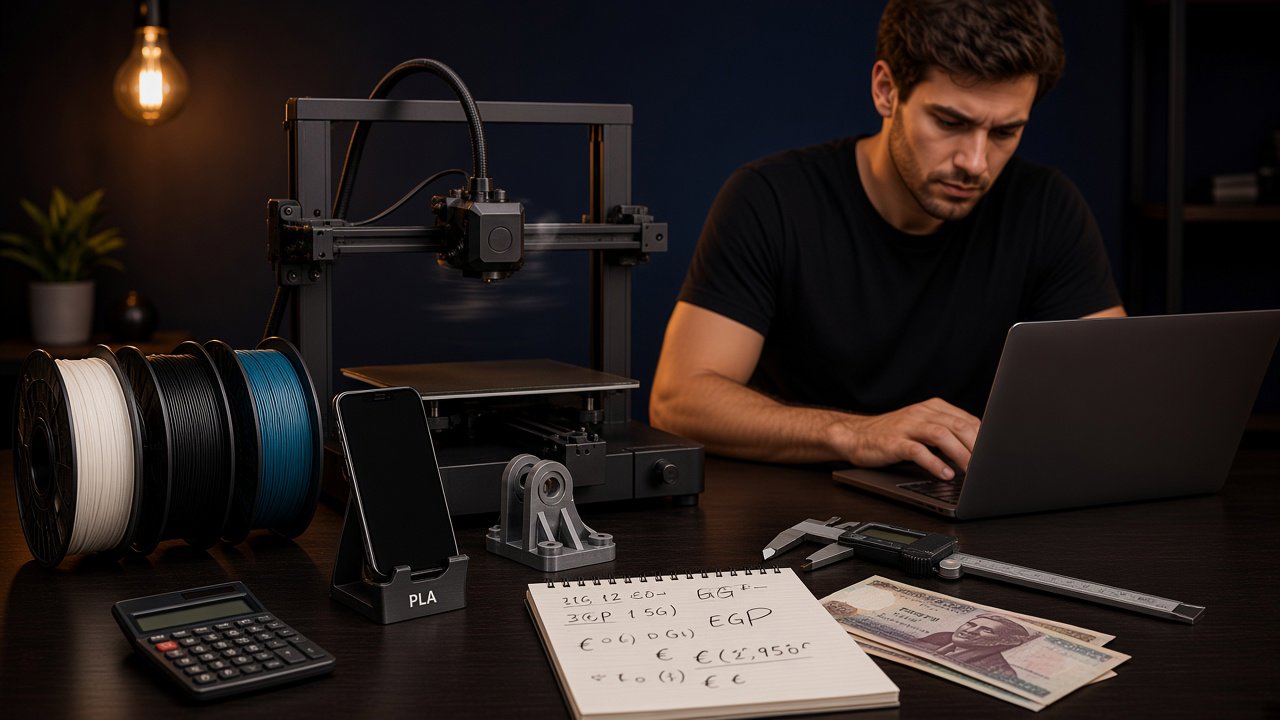
People ask “how much does 3D printing cost in Egypt?” expecting one number. There isn’t one. A phone stand and a load-bearing bracket can look similar in photos and cost very different amounts — because makers price time, risk, and finishing, not only plastic weight.
This guide explains what changes a quote, how to read a cheap offer, when owning a printer wins, and how to write a request that gets fair prices on Souq3D.
The short answer
Most small FDM jobs land in a wide band: from a few tens of pounds for a tiny PLA clip, up to hundreds for larger PETG/ABS parts with supports, sanding, or tight delivery. Resin miniatures are priced differently — detail and post-cure labor matter more than grams.
If someone quotes a price that looks “too good,” ask what is included: material grade, wall/infill settings, support removal, warping risk, and whether they reprint if the part fails.
What makers actually charge for
- Machine time — hours on the bed. Tall, slow, or high-detail jobs cost more even if the part is light.
- Material — PLA is usually cheapest. PETG, TPU, ABS/ASA, and specialty filaments add cost and sometimes enclosure risk.
- Supports and orientation — heavy support = extra filament, extra cleanup, higher chance of surface scars.
- Failure risk — warping, stringing, soft TPU, or thin walls raise the chance of a reprint. Good makers bake that into the quote.
- Post-processing — support scars, sanding, primer, paint, tapping holes, inserts. Finishing can cost more than the print itself.
- Rush and logistics — overnight jobs block the machine. Delivery across Cairo or other governorates is not free.
Volume is not the whole story
Two parts can have the same volume and very different prices:
- A solid block prints fast and strong, but wastes material if you only need stiffness in walls.
- A hollow shell with 15% infill uses less filament — but may need supports and careful orientation.
- A thin organic sculpture can take forever at 0.12 mm layers even if it weighs almost nothing.
When you upload an STL, mention the goal: visual mockup, functional bracket, or customer-facing product. That lets the maker choose layer height and infill without overbuilding the quote.
Settings that quietly change the price
You do not need eighty slicer knobs — but these few move money:
- Layer height — 0.28 mm is faster/cheaper; 0.12 mm looks better and takes longer.
- Walls and infill — 3–4 walls + modest infill often beats 100% solid for strength-per-pound.
- Supports — redesign to reduce overhangs and you often cut both price and scars.
- Material swap — “PETG because it’s stronger” is sometimes wrong; better orientation in PLA+ can be cheaper and enough.
If you already have preferred settings, write them in the request. If not, say the use case and let the maker propose a profile.
DIY filament vs ordering a print
Owning a printer looks cheaper per gram — until you count failed prints, electricity, nozzles, dry boxes, and your evenings.
- Order on Souq3D when you need one-off parts, rare materials, resin detail, or you hate tinkering.
- Buy a printer when you print weekly, iterate designs fast, or sell small-batch products.
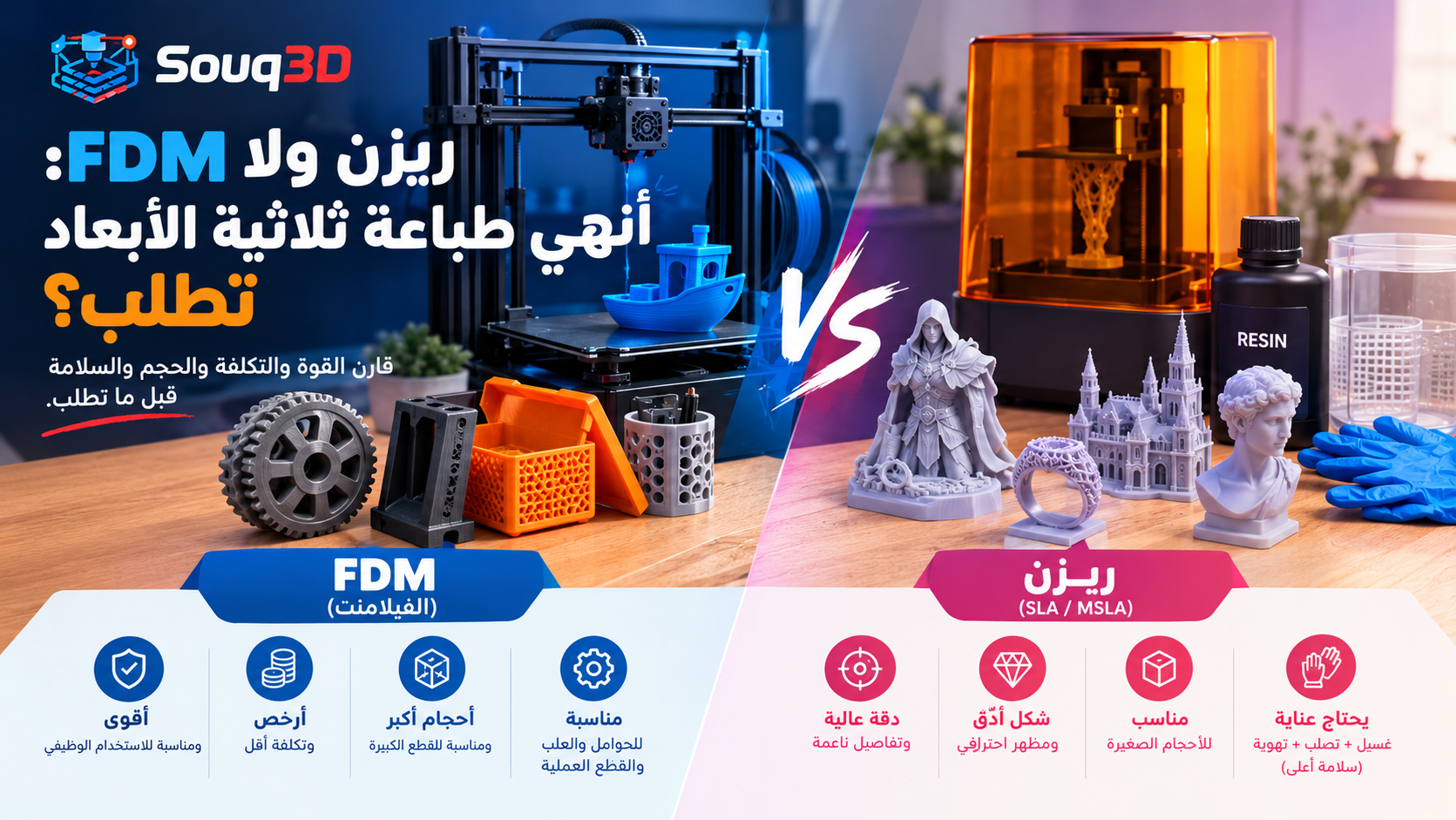
- Hybrid — design and iterate yourself, outsource large beds, ABS/ASA, or resin finishing.
A useful rule: if the part will change five times this month, owning (or a maker with fast turnaround) beats waiting on quotes for every revision.
How to get a fair quote on Souq3D
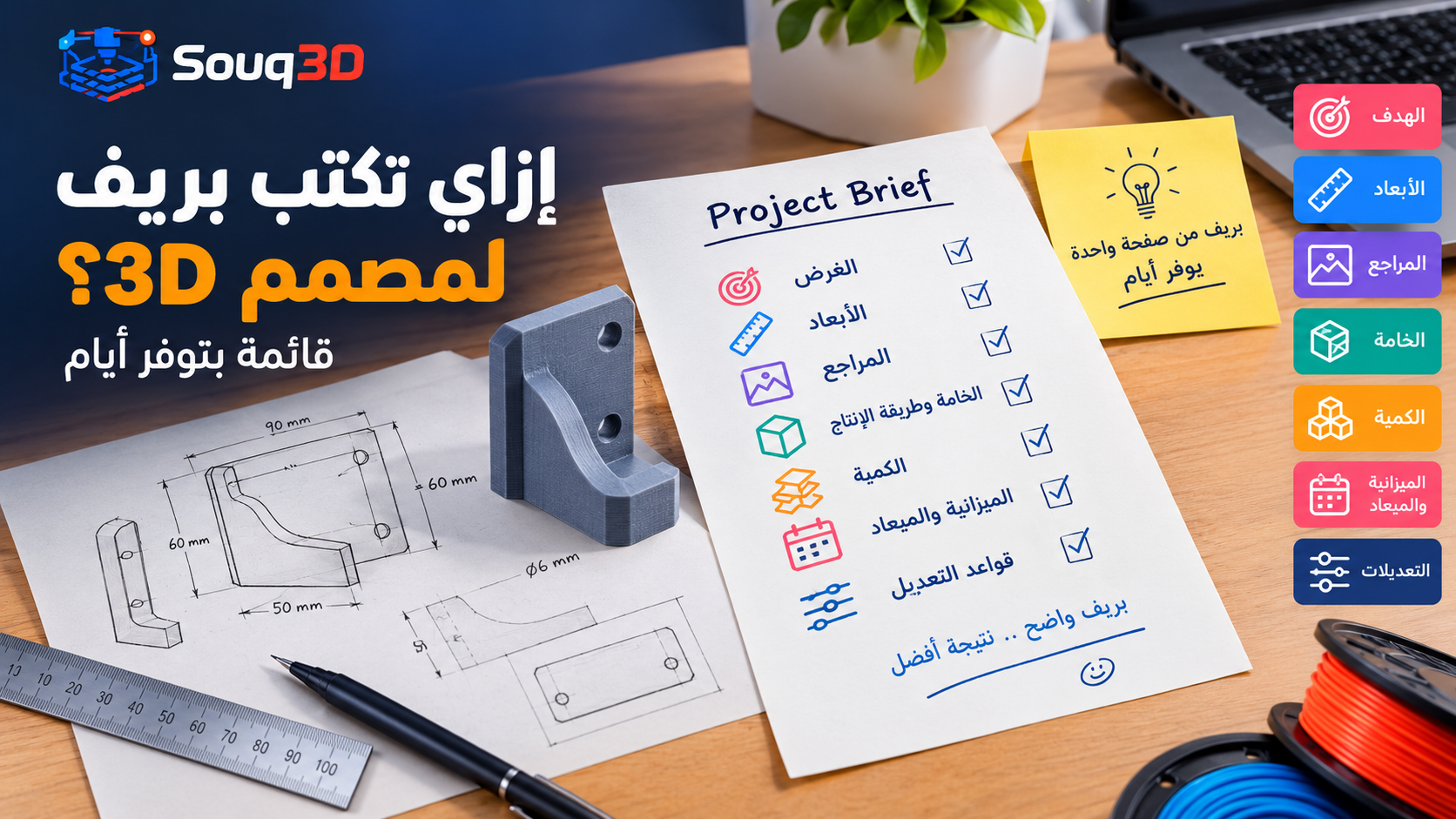
- Upload a clean STL/3MF (watertight, correct scale in mm).
- State material preference or the environment (sun, heat, flex, food-contact — be honest).
- Say quantity, deadline, and city/delivery needs.
- Attach a photo of the real object if this is a replacement part.
Vague requests get either inflated “safe” quotes or unrealistically low ones. Clear briefs attract serious makers.
Red flags in a cheap offer
- No questions about load, heat, or orientation on a functional part.
- “Any material, same price.”
- Promises of injection-mold quality straight off the bed with no finishing fee.
- Unwillingness to share approximate settings or photos of similar work.
Cheap is fine for a desk toy. Risky for a bracket that holds a TV, a bike mount, or a part near a hot engine bay.
Use the cost calculator — then talk to a human
Souq3D’s 3D cost calculator helps you sanity-check volume and material before you post. Treat it as a starting range, not a binding invoice. Real quotes still depend on supports, machine, and finishing.
Ready to price a real job? Start a print request with your file and requirements — compare offers from makers across Egypt instead of guessing a single number.
Comments (0)
No comments yet. Be the first to share your thoughts.