
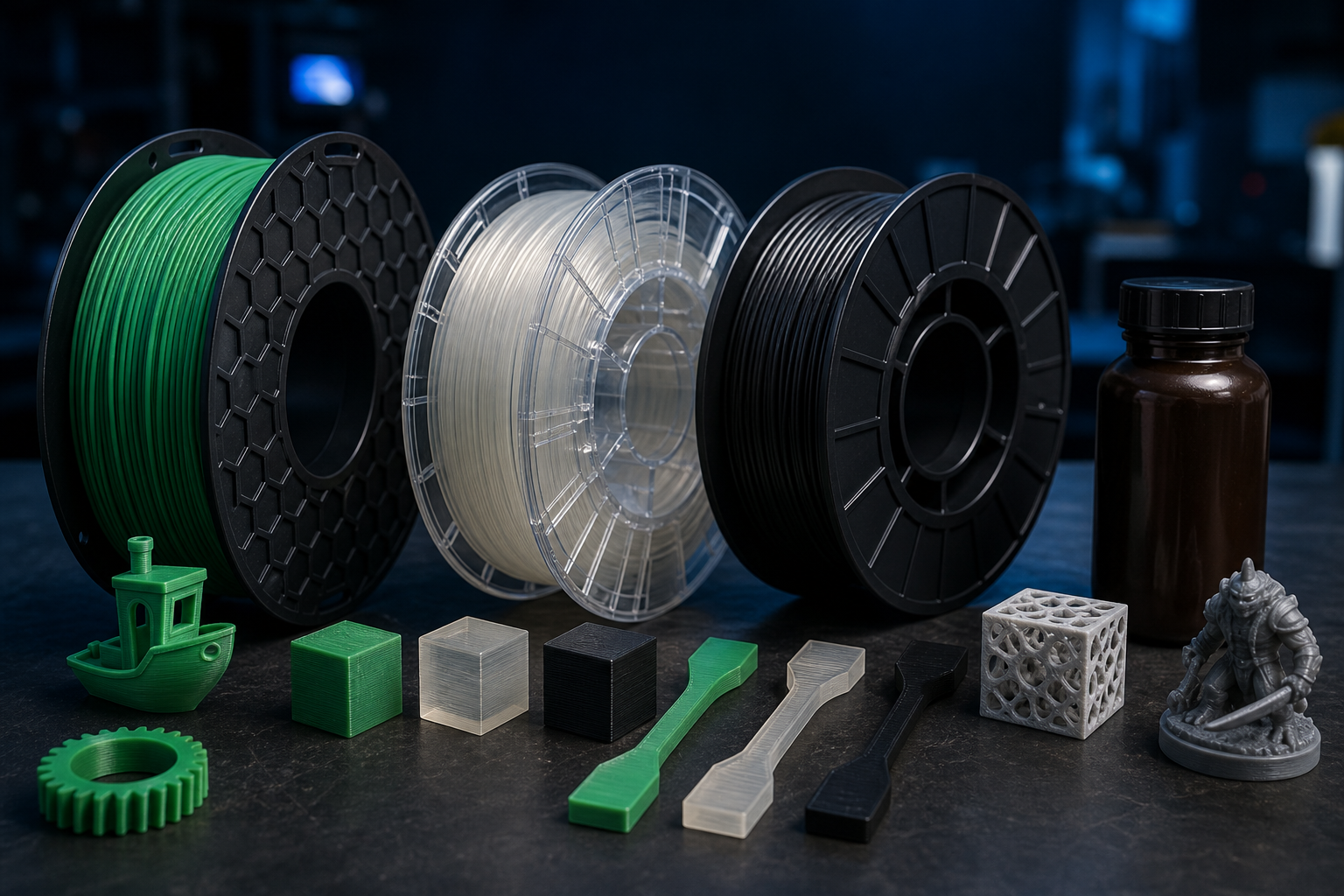
Short answer: Pick the material for the job: PLA for models and indoor parts because it is the easiest and cheapest, PETG for functional parts that need more toughness, ABS or ASA for heat and outdoor use, TPU for flexible parts such as gaskets and bumpers, and resin for fine detail and smooth surfaces. Start by asking whether the part faces heat, needs to flex, or must look clean more than it must be strong.
A good printer with the wrong material can still give you a bad part. That’s why material choice matters as much as the machine.
You don’t need to memorize every polymer name. You just need a clear mental map of the materials you’ll actually meet most often.
Why material choice matters
Every print asks a few silent questions: Will this sit in a hot car? Does it need to flex? Should it look clean on a shelf? Is toughness more important than beauty?
Answer those first, then pick the material. Not the other way around.
PLA — the everyday starter
PLA is the friendliest filament for beginners. It prints easily, smells mild, and looks good for prototypes, models, display parts, and many light-duty tools.
Use it when: you need fast, clean results indoors at room temperature.
Be careful when: the part faces heat (sun, cars, hot electronics housings). PLA can soften earlier than tougher plastics.
PETG — the practical step up
PETG is often the next move when PLA isn’t tough enough. It’s more durable, handles moisture/chemicals better in many cases, and stays useful for functional housings and stronger brackets.
Use it when: you want a balance of printability and real-world toughness.
Trade-off: stringing can be fiddly, and it may need slightly more tuning than PLA.
ABS / ASA — for heat and outdoor use
ABS (and outdoor-friendly cousins like ASA) handle higher temperatures better than PLA. That’s why they show up in automotive-style parts, tougher enclosures, and outdoor-facing pieces.
Use them when: heat resistance and toughness matter.
Trade-off: more warp risk, better enclosure/ventilation habits, and less beginner-friendly settings.
TPU — when the part must flex
TPU is a flexible filament. Think gaskets, phone-case style softness, vibration damping, protective bumpers.
Use it when: rigidity is the enemy.
Trade-off: slower printing and more setup care; not every printer handles it equally well.
Resin materials — detail first
Resin isn’t one material. Standard resins favor detail and appearance. Tough/abs-like resins improve durability. Flexible resins exist too. Dental/castable resins serve specialized workflows.
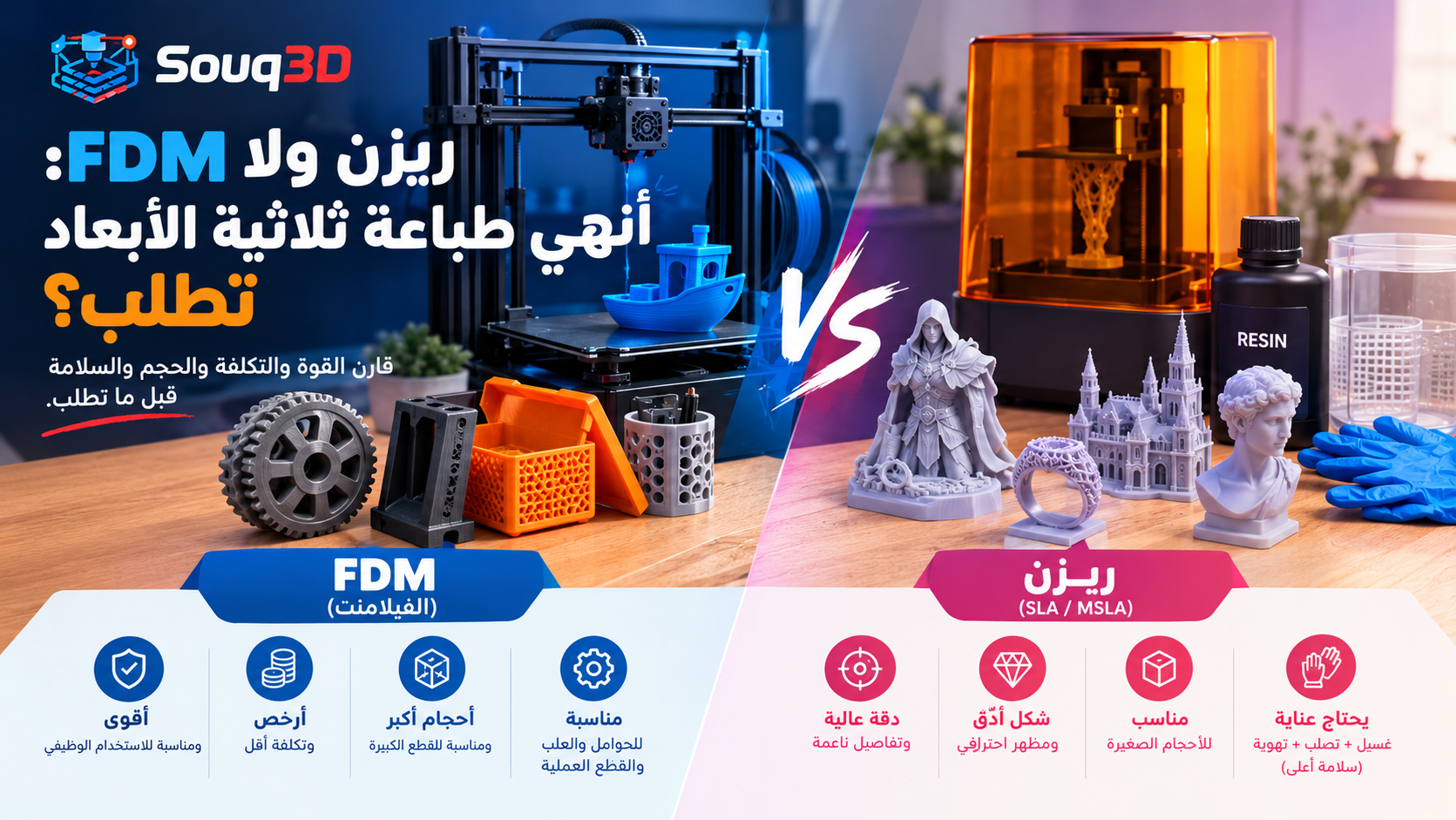
If your priority is surface finish and tiny features, resin often wins. If your priority is a large structural bracket, filament is usually smarter.
A simple decision guide
- First prototype / looks / indoor model: PLA
- Functional part with better toughness: PETG
- Heat / outdoor stress: ABS / ASA
- Needs to bend: TPU
- Tiny detail / smooth cosmetic finish: resin (right resin type)
There’s no universal “best material.” There’s only the best material for this part.
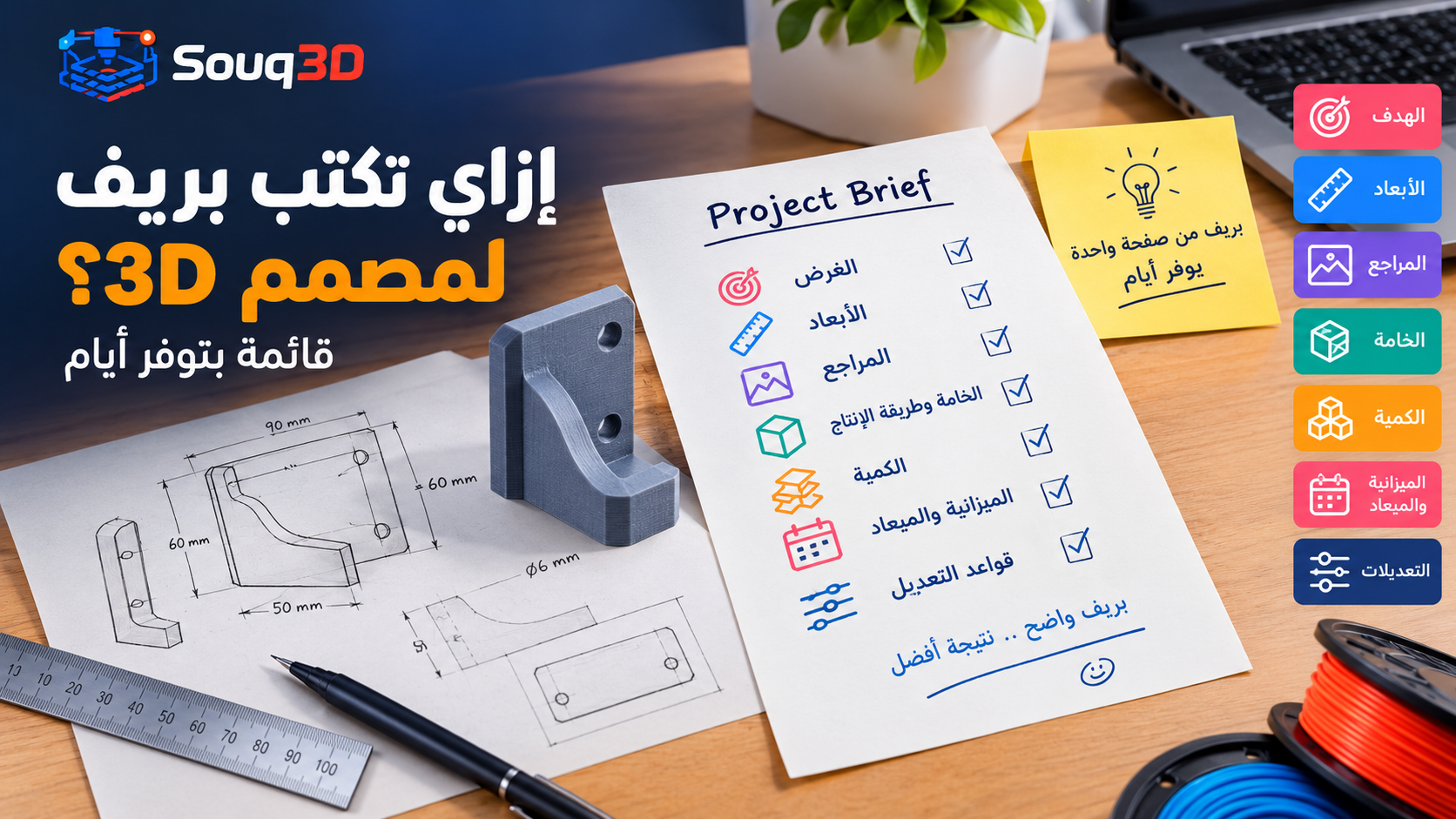
If you’re ordering a print and you’re not sure, describe the use case (load, heat, outdoor/indoor, cosmetic vs functional) on Souq3D. A good maker will usually recommend the right material before quoting blindly.
Comments (0)
No comments yet. Be the first to share your thoughts.