
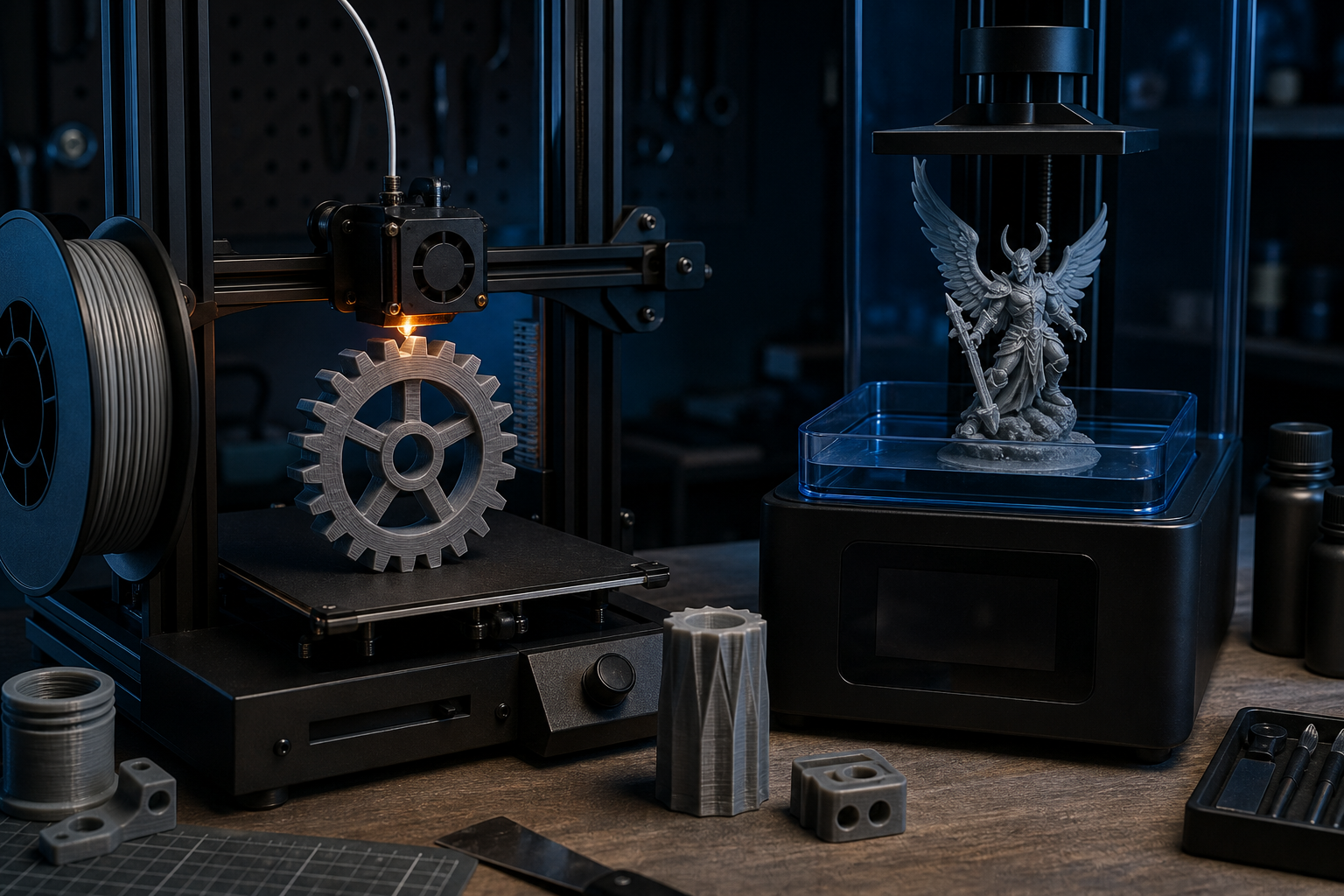
If you’re new to 3D printing, the first big question is rarely “which brand?” It’s usually this:
Should I print with filament (FDM) or resin?
Both can make great parts. They just shine in different situations — and understanding that saves you time, money, and a lot of failed prints.
FDM in plain language
FDM (Fused Deposition Modeling) is the classic plastic-filament printer most people picture: a heated nozzle melts filament and draws your part layer by layer.
It’s popular because it’s practical. Materials like PLA and PETG are easy to find, running costs are usually lower, and the workflow is forgiving for prototypes, brackets, housings, tools, and everyday functional parts.
The trade-off: you’ll often see layer lines, and tiny details (jewelry textures, miniature faces, sharp micro-features) are harder than on resin.
Resin in plain language
Resin printing (SLA / LCD / DLP styles) uses liquid resin cured by light. The result can look almost injection-molded: smoother surfaces and finer detail.
That’s why resin is loved for miniatures, dental models, highly detailed prototypes, and small high-precision parts. But it also asks for more care — gloves, proper ventilation, washing, curing, and safer handling of chemicals.
Quick comparison
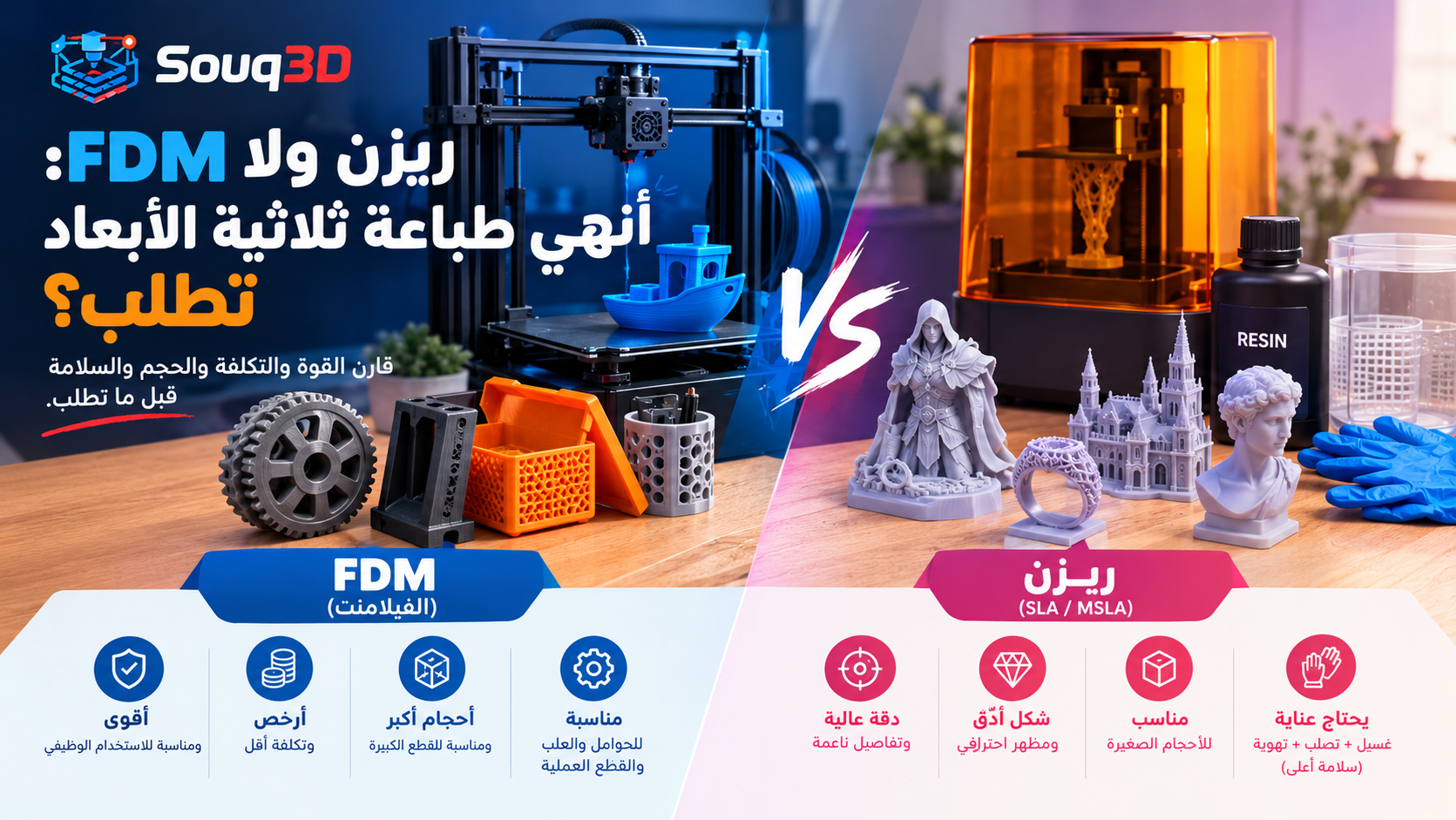
- Detail: Resin usually wins. FDM is good enough for most engineering shapes.
- Strength for tough use: FDM with the right material often wins for larger functional parts.
- Ease for beginners: FDM is generally simpler day to day.
- Finish quality: Resin looks cleaner out of the printer; FDM often needs sanding/painting for show pieces.
- Size & cost: Larger cheap parts are usually more practical on FDM.
- Work environment: Resin needs more cleanup discipline and safety habits.
Which one should you choose?
Choose FDM if you need:
- brackets, enclosures, jigs, fixtures, replacement clips
- fast iterations of a functional product
- lower material cost and simpler operation
Choose resin if you need:
- high visual detail or very small features
- smooth presentation models
- jewelry-style, miniature, or dental-type accuracy
And if you’re unsure? Start with the use case, not the hype. A strong FDM print that works beats a beautiful resin print that breaks on day one — and the reverse is true for detail-heavy showpieces.
A practical tip
Many makers use both. FDM for the workhorse parts. Resin for the detail pieces. You don’t have to pick a lifelong camp.
If you already have a file (or only an idea), you can post a request on Souq3D and let local makers recommend the better process for your part — with real quotes instead of guesswork.
Comments (0)
No comments yet. Be the first to share your thoughts.