
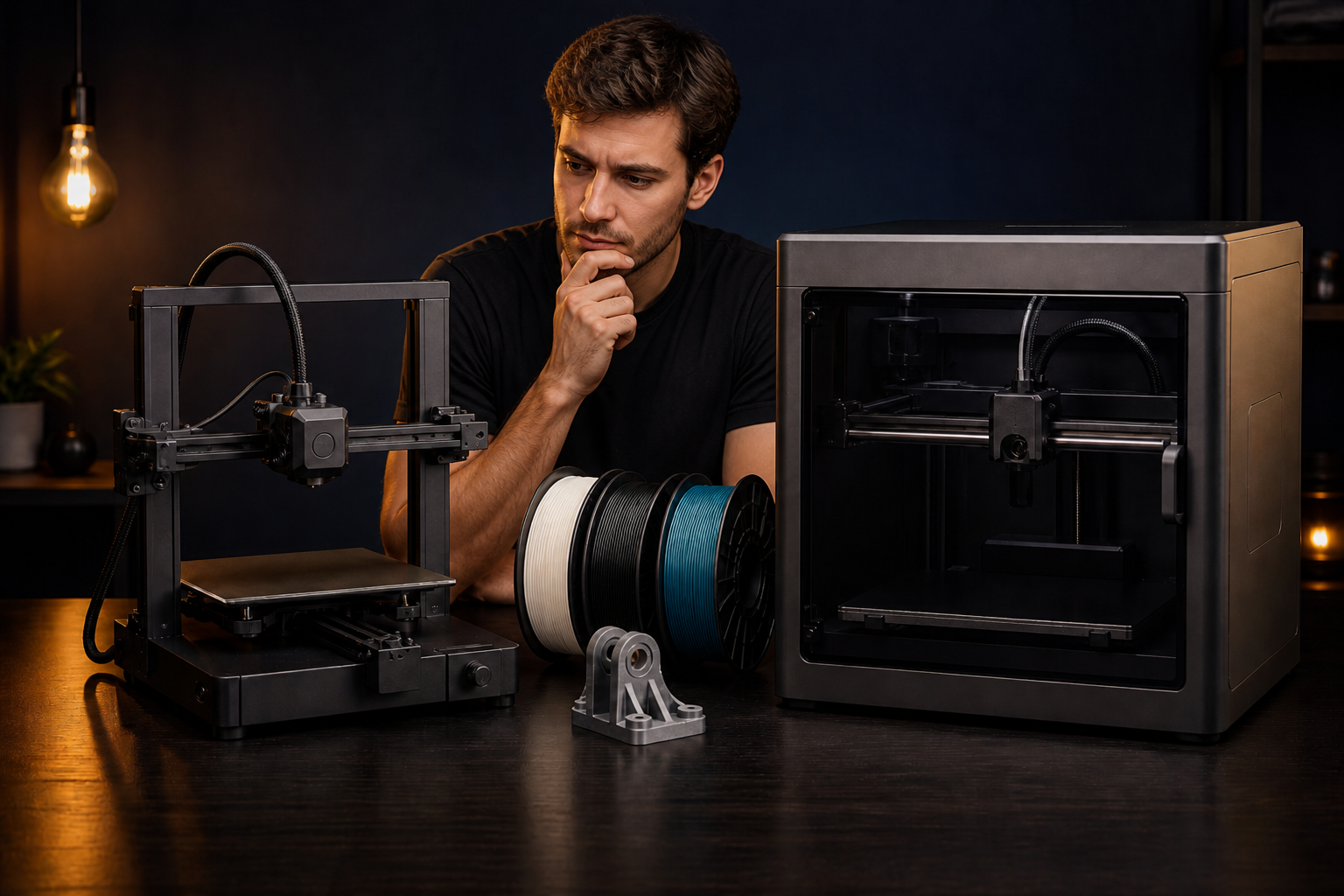
Buying a first 3D printer is exciting — and easy to get wrong. The wrong machine sits in a corner after three failed weekends. The right one becomes a tool you actually use: prototypes, replacements, gifts, small-batch products.
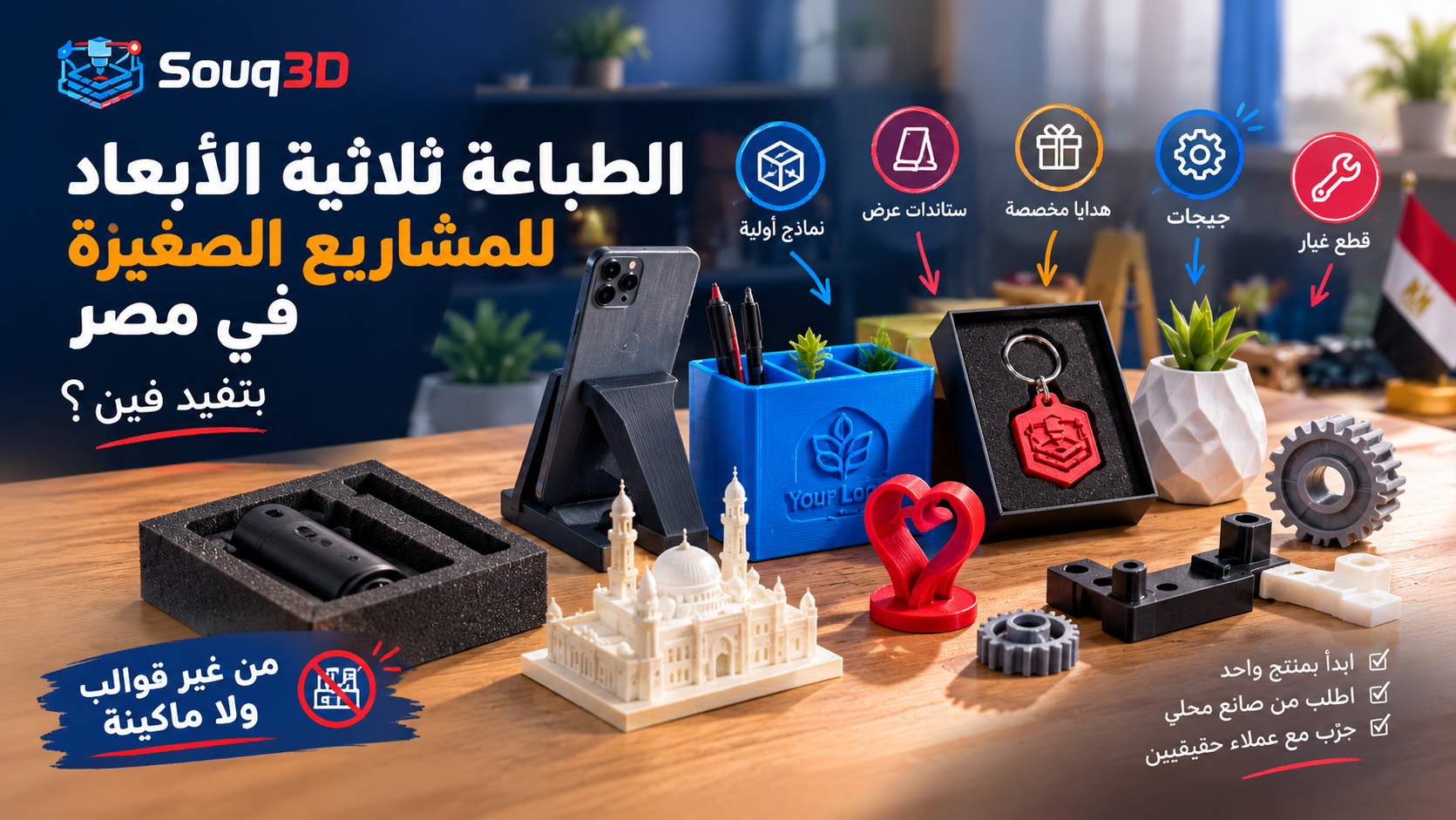
This guide is written for Egypt: local budgets, spare-parts reality, heat, humidity, and the choice many people face — buy a printer or hire a maker on Souq3D until the volume justifies owning one.
Start with the job, not the brand
Before you open marketplace listings, answer three questions:
- What will you print most? Toys and figurines, functional brackets, product mockups, or resin miniatures?
- How often? Once a month is different from three nights a week.
- Where will it live? Bedroom, balcony, workshop, office? Noise, smell, and enclosure matter more than people admit.
If your answer is “I need one or two parts a month and I hate tinkering,” you may not need a printer yet. Post the file on Souq3D, pay for the print, and learn materials from real parts before you invest.
FDM or resin for a first machine?
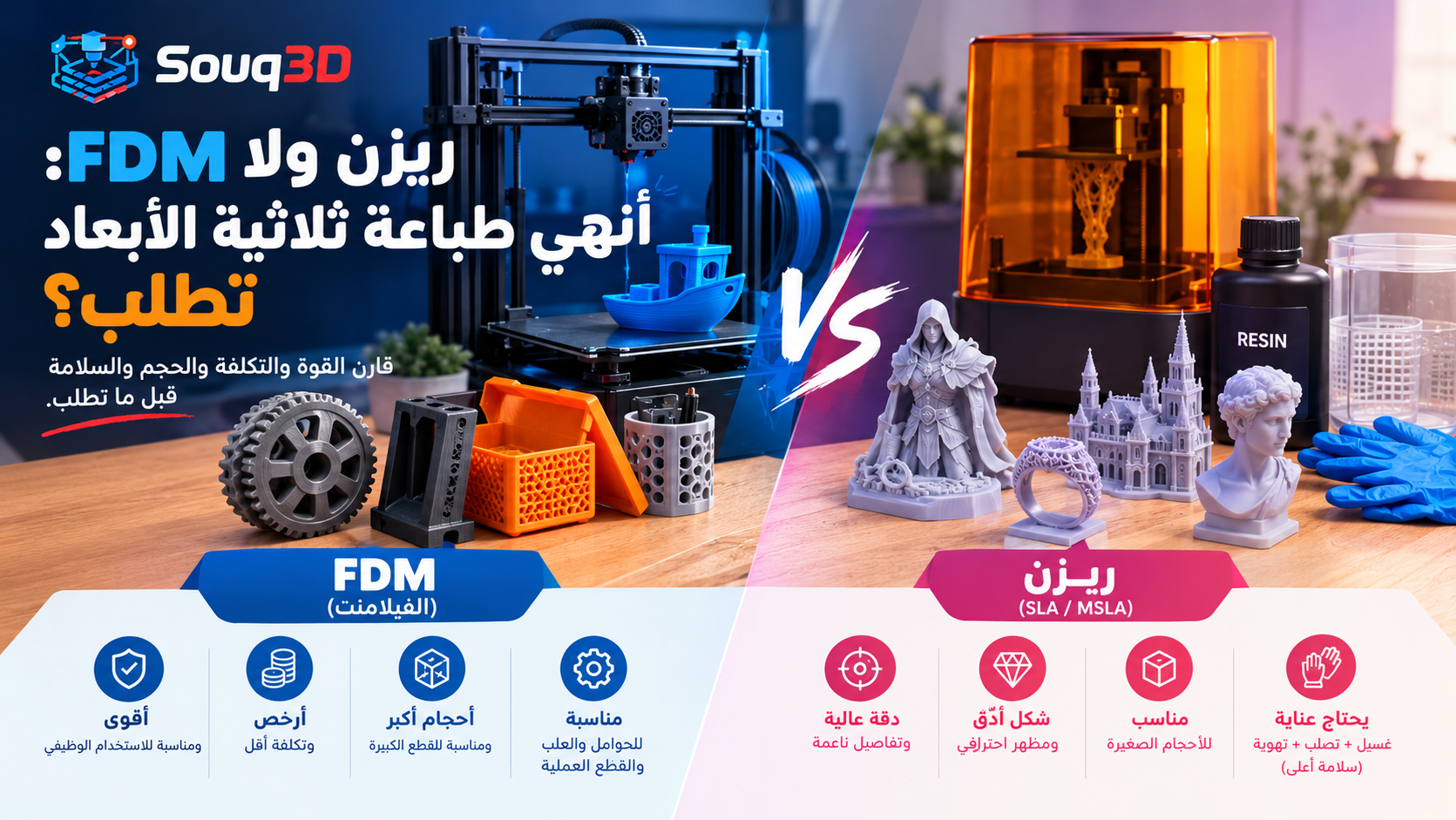
We already compared FDM and resin in detail on the blog. For a first purchase in Egypt, the practical default is usually FDM:
- Cheaper filament, easier spare nozzles, less chemical handling.
- Better for functional parts, enclosures, jigs, and larger objects.
- Resin wins for tiny detail and miniatures — but needs IPA/wash, gloves, curing, and careful disposal. Not a casual bedroom hobby.
Buy resin second, when you know you need that detail weekly.
Budget bands that actually make sense
Prices move, so think in bands — not one viral model name:
- Entry FDM — a reliable open-frame or compact bed-slinger with auto bed leveling. Good for PLA and light PETG. Expect to buy spare nozzles, a PEI sheet, and a better filament path early.
- Mid FDM — faster CoreXY or a well-supported enclosed machine. Better for PETG, longer jobs, and less babysitting. Worth it if you will print weekly.
- Enclosed / engineering — for ABS/ASA, higher ambient temps, and serious product work. Overkill for most beginners; rent that capability from a maker first.
- Entry resin — only if your main work is miniatures, jewelry masters, or dental-scale detail — and you have a ventilated wash/cure setup.
Leave 15–20% of the budget for consumables and setup: filament, PEI/glue, nozzles, SD/USB, a dry box, and a UPS if your building brownouts mid-print.
Features that matter more than marketing
- Auto bed leveling + easy Z-offset — saves beginners more than any “AI camera” claim.
- Direct drive — nicer for TPU; Bowden is fine for PLA if tuned.
- Parts availability — nozzles, belts, fans, PEI sheets you can buy locally or ship quickly. A cheap machine with no spares is expensive.
- Noise — if it lives near sleeping kids or a shared flat, listen to real reviews, not the brochure.
- Build volume — 220×220×250 mm covers most first-year needs. Giant beds tempt people to print huge, slow, warped panels they are not ready for.
Open frame vs enclosed in Egyptian weather
Open frames are fine for PLA. Drafts from AC and open windows still cause warping on large flats — a cardboard box enclosure helps more than another glue stick.
An enclosed printer helps PETG consistency and is closer to ABS/ASA readiness. In a hot room (30°C+), PLA can get soft on the bed; you may need slightly cooler bed temps and careful cooling. Enclosure is a tool, not a requirement for every beginner.
Buying new vs used
Used printers are common and risky. If you buy used:
- Ask for a video of a first-layer square and a short successful print — not a static photo.
- Check belts, bed damage, nozzle condition, and whether the mainboard is stock or heavily modified with no docs.
- Budget for a new hotend/nozzle and PEI sheet immediately.
For a first machine, new with local warranty or a seller who answers WhatsApp is often worth the premium.
What to print in the first two weeks
- A first-layer calibration square.
- A 20 mm cube (dimensional check).
- A simple functional object you will use (hook, cable clip, phone stand).
- One PETG print only after PLA is reliable.
Do not start with a 14-hour multi-color character. Build confidence, then complexity.
Own a printer or use Souq3D?
Own a printer when you enjoy the process and print often enough that quotes would cost more than filament + time. Use Souq3D when:
- You need one prototype this week and zero learning curve.
- The part needs resin detail, ABS strength, or a finish you do not want to sand.
- You want to test demand for a product before buying hardware.
Many successful makers on the platform started the same way: outsource first, buy second, specialize third.
A simple decision checklist
- Mostly functional PLA/PETG parts → entry or mid FDM with auto-leveling.
- Tiny detailed models weekly → resin + proper wash/cure space.
- Rare prints / urgent deadlines → order on Souq3D instead of buying yet.
- Always reserve money for filament drying and a spare nozzle — not another unused machine.
The best first printer is the one you will keep running — not the one with the longest feature list on a banner ad.
Comments (0)
No comments yet. Be the first to share your thoughts.