
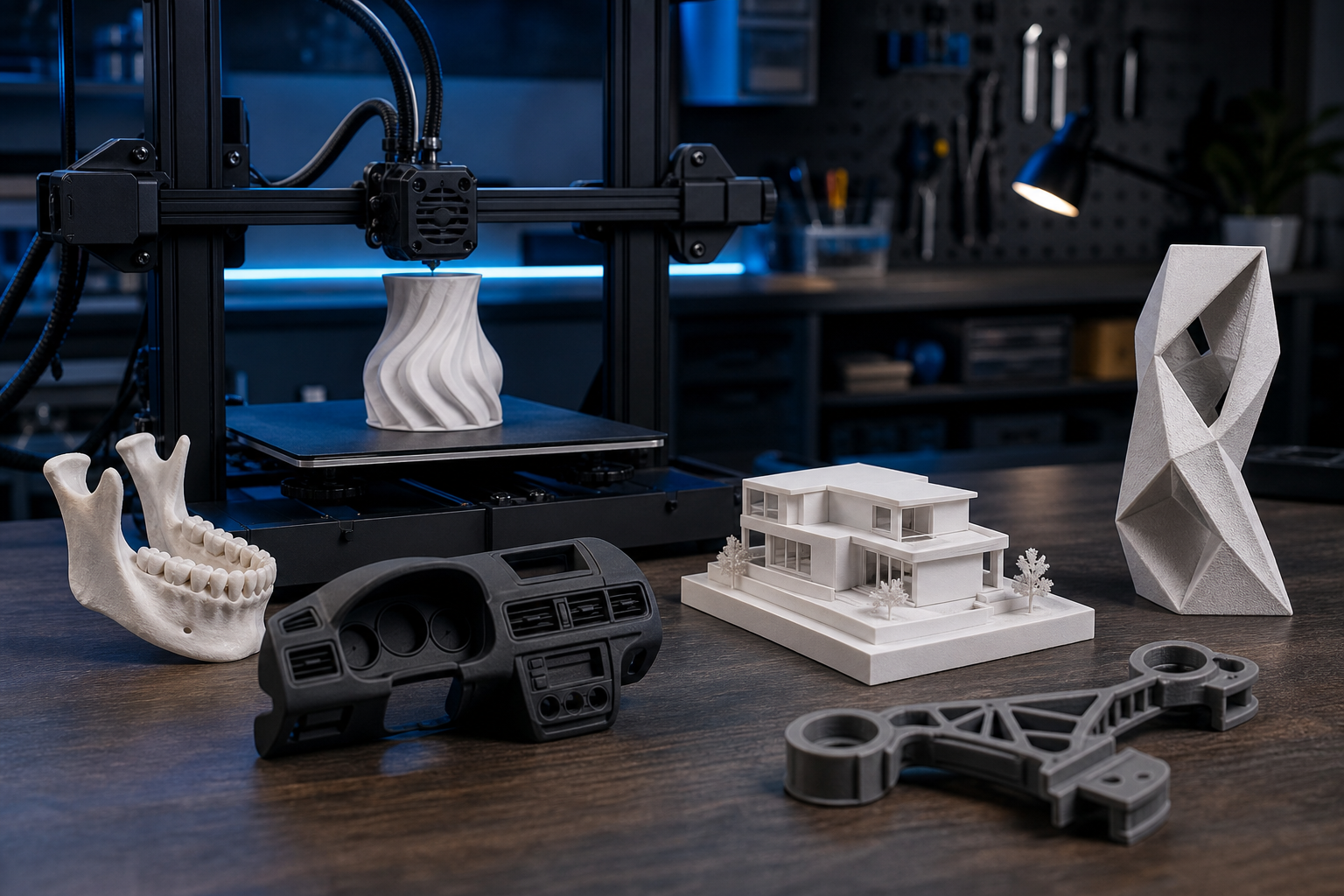
You’ve probably seen a plastic figurine come out of a machine, or watched a short video of something “growing” layer by layer. That feeling of “wait… is this real manufacturing?” is usually how most people first meet 3D printing.
The short answer: yes, it’s real. And once you understand how it works, you start seeing why so many industries treat it as a serious tool — not a toy.
What is 3D printing?
3D printing (also called additive manufacturing) is a way of building a physical object from a digital model by adding material one layer at a time.
Traditional manufacturing often starts with a block of material and cuts or shapes it down — carving wood, machining metal, molding plastic. 3D printing goes the other direction: it starts with almost nothing and builds the part up.
That one difference changes a lot. You can make complex shapes that are hard or expensive with older methods. You can try a design today, improve it tomorrow, and print again without waiting for a factory mold. And you can make one unique piece without needing mass production.
In practice, most beginners start with common plastic printing (often called FDM), while professionals also use resin printers for finer detail, and industrial systems that print stronger plastics, composites, or even metal.
How does 3D printing work?
The process looks different from machine to machine, but the journey is usually the same:
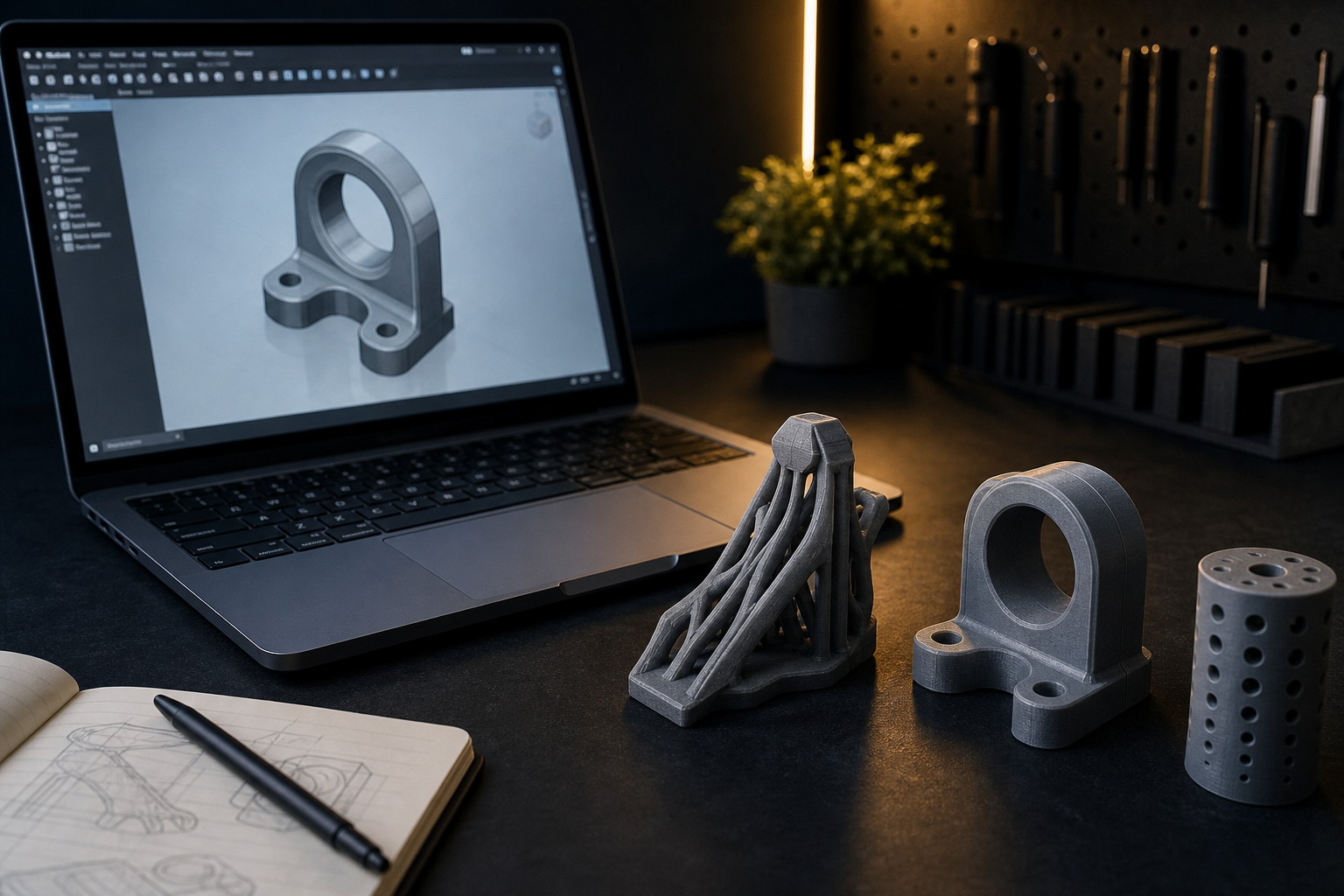
- Design the part — in CAD software, or by scanning / downloading a ready model.
- Export a 3D file — typically STL or OBJ (and often 3MF in newer workflows).
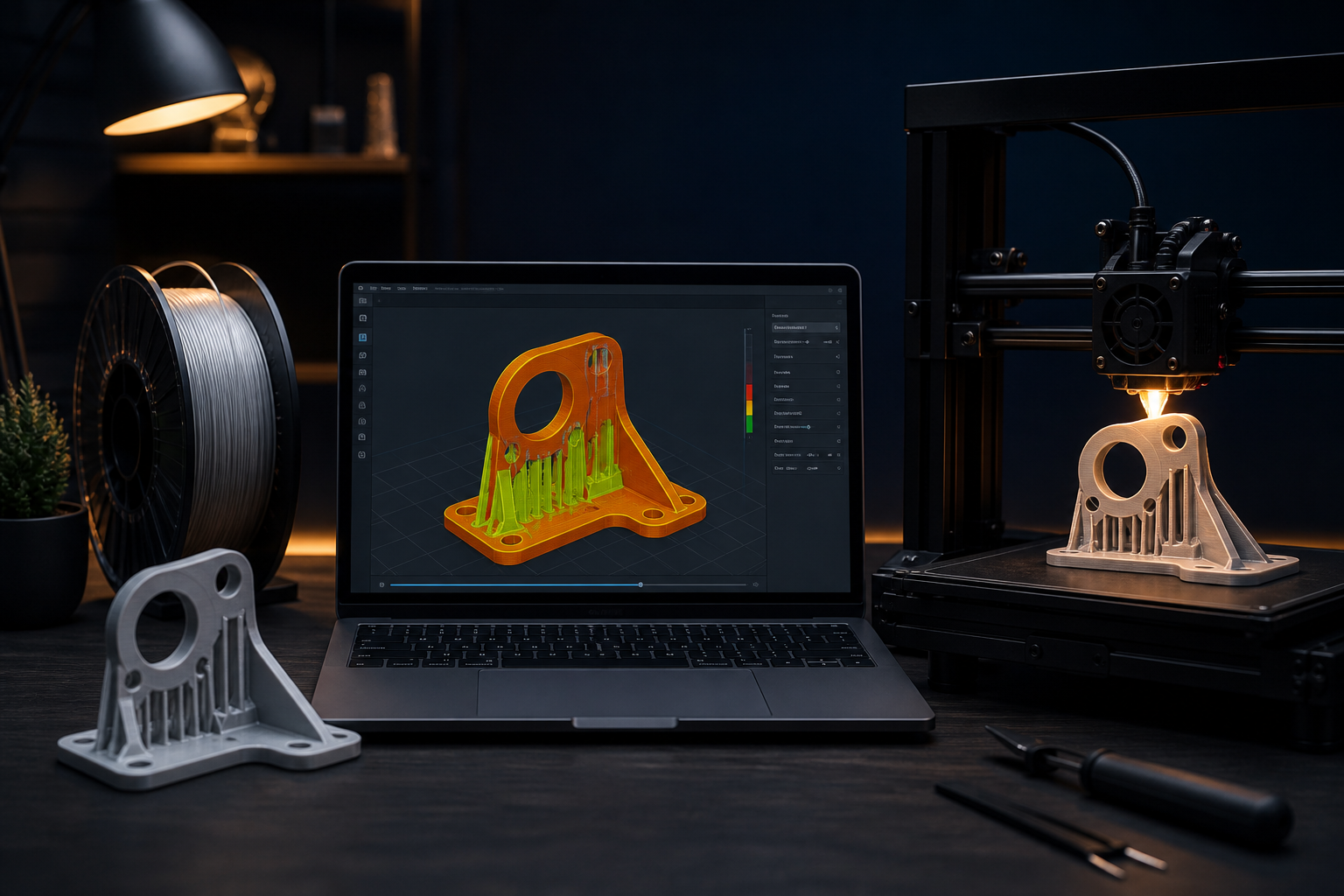
- Slice the model — software cuts the design into thin layers and creates instructions for the printer.
- Print — the machine deposits, cures, or fuses material layer by layer.
- Finish — remove supports, clean, sand, cure (for resin), or assemble as needed.
Think of it like building a wall — but with thousands of very thin walls stacked into a useful object. On a filament printer, plastic is melted and drawn in paths. On a resin printer, light hardens liquid resin point by point or layer by layer. Different tech, same idea: layers become a solid part.
What decides quality? Geometry, material, layer height, printer condition, and — honestly — experience. A good print is half machine, half knowing what makes a design printable.
Does 3D printing have a future? Does it have real value?
Yes — and not because it’s trendy. Because it solves problems the old way struggles with.
Speed when timing matters. Prototypes that once took weeks can take hours or a few days. For startups, product teams, and workshops, that is real money saved.
Customization without huge tooling cost. Making one dental aligner model, one drone bracket, or one spare part for a discontinued machine is where 3D printing shines. You don’t need a mold for every small change.
Local production. Instead of waiting for overseas stock, many businesses print what they need closer to the customer. That matters for spare parts, short runs, and markets that move fast.
Complexity becomes cheaper. Lattices, internal channels, organic shapes — designs that used to be “nice idea, hard to make” are often straightforward in 3D printing.
Is it replacing every factory? No. Injection molding still wins for millions of identical cheap parts. CNC still wins for many precision metal jobs. 3D printing’s value is different: flexibility, iteration, and on-demand making.
So if someone asks, “Does it have a future?” — look at medical devices, aerospace parts, dental labs, education, and repair shops already using it daily. The question isn’t whether it survives. The question is how widely each industry will adopt it.
Where is 3D printing used?
More places than most people expect:
- Product design & prototyping — test form, fit, and function before expensive tooling.
- Engineering & manufacturing — jigs, fixtures, housings, short-run parts, tooling aids.
- Healthcare & dentistry — surgical guides, models, dental applications, custom supports.
- Automotive & mobility — concept parts, fixtures, lighter components, aftermarket pieces.
- Aerospace & defense — complex lightweight parts and rapid iteration (often with high-end machines/materials).
- Architecture & construction — scale models, formwork ideas, and experimental building methods.
- Education — turning theory into something students can hold and improve.
- Art, fashion & consumer products — sculptures, wearables, custom gadgets, limited runs.
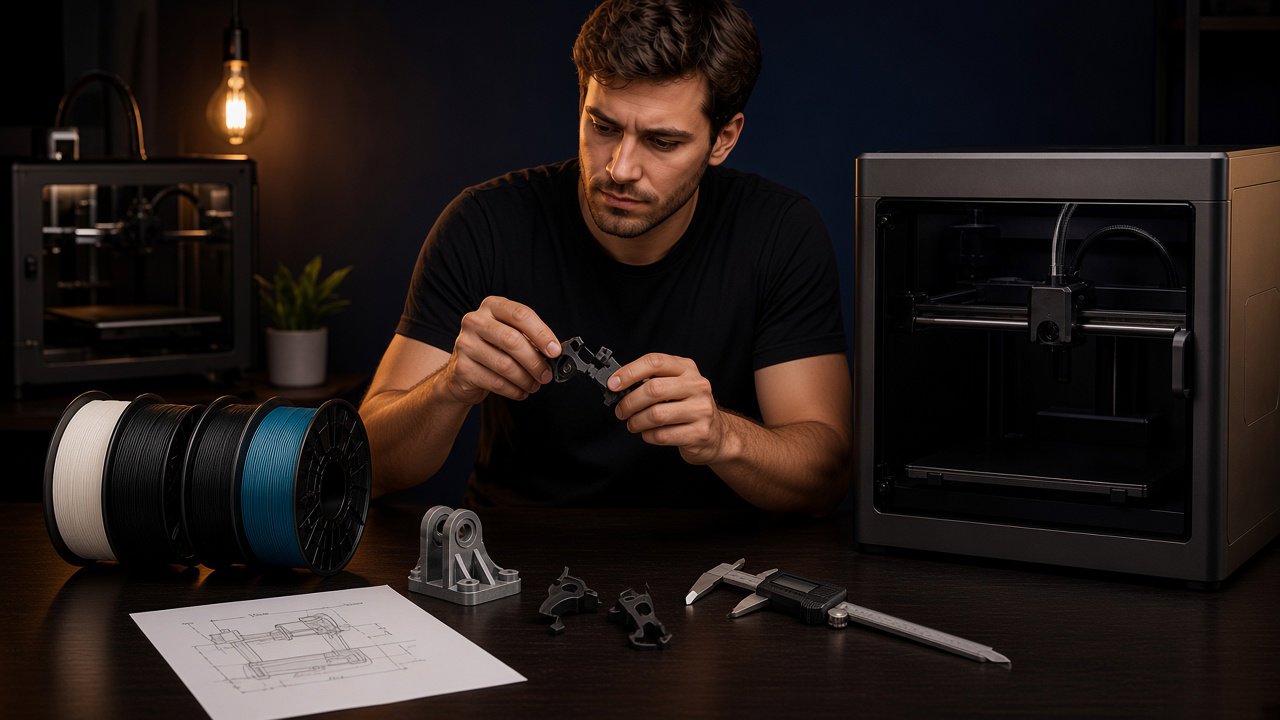
- Repair & spare parts — remaking a broken clip or bracket instead of scrapping the whole product.
That last point is especially practical. In many homes and workshops, 3D printing starts as “can we remake this missing piece?” — and grows into a skill that opens bigger projects.
What should beginners remember?
You don’t need a factory to start learning. You need a clear goal: a prototype, a functional part, a model, or a custom product. From there, choose the right process (plastic filament vs resin vs outsourcing to a maker), and respect the basics — wall thickness, orientations, supports, and material limits.
3D printing isn’t magic. It’s a practical manufacturing method with a very human upside: you can turn an idea into something you can hold — faster, more personally, and with fewer barriers than before.
If you’re in Egypt and want to go from idea or file to a real print, platforms like Souq3D make it easier to work with local designers and makers instead of figuring out every step alone.
Comments (0)
No comments yet. Be the first to share your thoughts.