
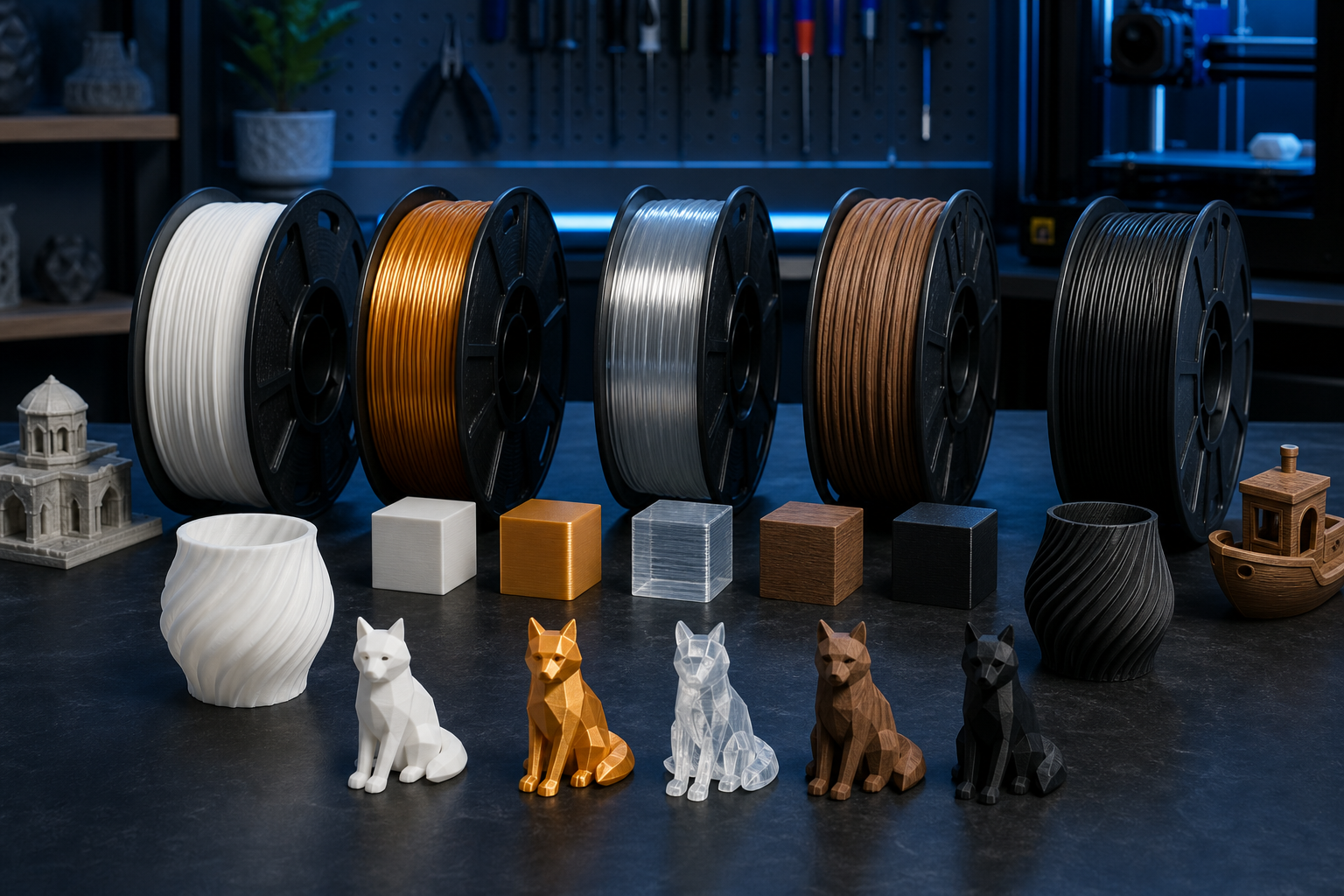
If you buy filament for the first time, you’ll see “PLA” everywhere. Then you’ll notice something confusing: silk PLA, matte PLA, PLA+, wood PLA, high-speed PLA… all under the same family name.
So which one should you use? Let’s break it down in plain language.
What is PLA?
PLA (Polylactic Acid) is the most common filament for FDM 3D printing. It’s usually made from plant-based sources like corn starch or sugarcane, and it’s popular because it’s easy to print, has low odor, and gives clean results with less warping than tougher plastics.
That’s why beginners start with PLA — and why many makers still use it daily for prototypes, models, display pieces, fixtures, and light-duty functional parts.
But “PLA” is a family, not one single recipe. Brands blend additives, pigments, and modifiers to change look, strength, and print behavior.
Main types of PLA materials
1) Standard PLA
The classic option. Easy to print, good surface quality, and usually the cheapest.
Best for: first prototypes, indoor models, learning prints, visual mockups.
Watch out: weaker under heat and impact compared with stronger PLA blends.
2) PLA+ (or PLA Pro)
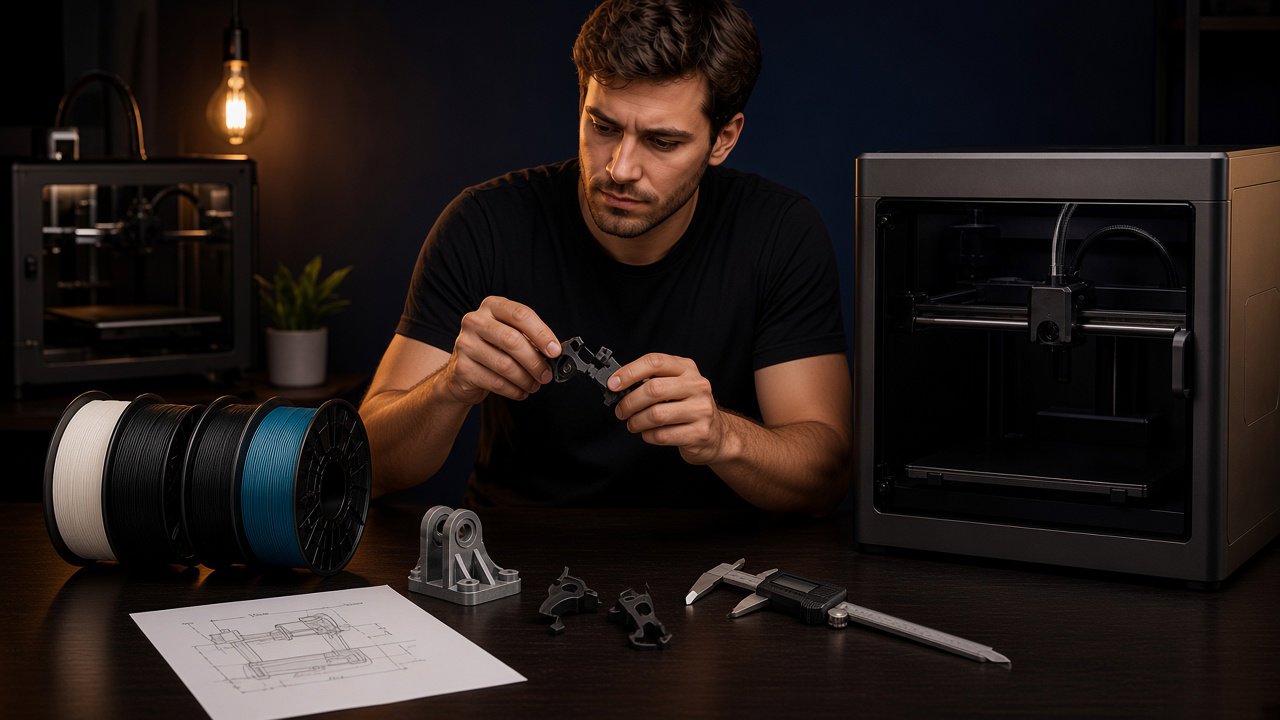
A tougher version of PLA. Brands add modifiers to improve impact resistance and durability, while keeping most of PLA’s easy printability.
Best for: brackets, housings, tools, parts that get handled more often.
Watch out: still not a high-temperature material. Hot car interiors can still soften it.
3) Silk / Glossy PLA
Made for appearance. Prints come out shiny, almost metallic-looking, with less need for sanding or paint.
Best for: decorative pieces, gifts, sculptures, presentation models.
Watch out: usually more brittle and less ideal for load-bearing parts.
4) Matte PLA
Gives a soft, non-shiny finish that hides layer lines better than glossy filaments.
Best for: product mockups, architectural models, clean modern looks.
Watch out: finish is the star here — mechanical strength varies by brand.
5) High-speed PLA
Formulated for modern fast printers. Designed to keep quality at higher print speeds and flow rates.
Best for: rapid prototyping when turnaround time matters.
Watch out: results depend heavily on printer capability and tuning.
6) Filled PLA (wood, metal, marble, glow, etc.)
These mix PLA with powders or special additives:
- Wood-fill: natural look, can be sanded like light wood.
- Metal-fill: heavier feel and metallic appearance.
- Marble/stone-fill: speckled decorative finish.
- Glow-in-the-dark: fun visual effect after light exposure.
Best for: decorative and specialty aesthetic projects.
Watch out: more abrasive on nozzles (especially metal/glow), and often weaker than clean PLA+.
7) Specialty PLA blends (flexible-ish, toughened, low-warp)
Some brands sell “tough PLA,” “engineering PLA,” or similar blends aimed at better toughness or print stability. Useful, but quality differs a lot between manufacturers — always read the datasheet and test a small print first.
What’s the difference between them?
Think in three buckets:
- Ease of printing: Standard PLA and most PLA+ are easiest. Filled and silk can need more tuning.
- Looks: Silk = shiny. Matte = soft finish. Wood/metal/marble = special textures.
- Strength vs beauty: PLA+/tough blends usually win for function. Silk and filled PLA usually win for appearance.
A simple rule:
- Need it to work? Start with PLA+.
- Need it to look premium? Start with silk or matte.
- Need it fast? Try high-speed PLA on a capable printer.
- Need a special aesthetic? Choose filled PLA carefully.
What PLA is (and isn’t) good for
Great for: prototypes, cosplay props, educational models, display parts, indoor jigs, concept products.
Not ideal for: parts that sit in high heat, outdoor sun for long periods, or heavy mechanical stress over time. In those cases, PETG, ABS/ASA, or other engineering materials are usually better.
Practical tip before you order a print
Don’t just write “print in PLA.” Tell the maker:
- Is it decorative or functional?
- Will it face heat or outdoor conditions?
- Do you care more about shine, matte look, or strength?
That short brief helps them choose the right PLA type — and avoids a beautiful print that fails in real use.
Need help choosing for a real part in Egypt? Share your use case on Souq3D and get local maker recommendations with clear quotes.
Comments (0)
No comments yet. Be the first to share your thoughts.